
Hyundai is preparing to make a new entry into India’s electric car market. The company is developing a ‘made-in-India’ compact electric SUV, currently known by the internal codename ‘HE1i’. According to recent reports, this upcoming EV could be named the ‘Hyundai Ioniq P’.
During Hyundai Motor Company’s Q3 earnings call on October 29, 2026, management mentioned the name ‘Ioniq P’ in the context of the Indian market. This has intensified discussions surrounding the upcoming electric SUV. However, it is important to note that Hyundai Motor India has not yet officially confirmed the final name for this model.
Follow EVJournal.in on X for the latest EV news & updates instantly!
This Hyundai Ioniq P upcoming electric SUV is expected to be positioned below the ‘Creta Electric’ within Hyundai’s Indian EV portfolio. The objective is to offer a relatively more accessible electric SUV option for Indian buyers.
So, what is currently known about this upcoming EV from Hyundai? When might it launch, and what can buyers expect? Let’s look at the details.
Also Read: How to Install EV Charging in an Apartment Parking in India: 7 Things to Know
Hyundai Ioniq P: What We Know So Far
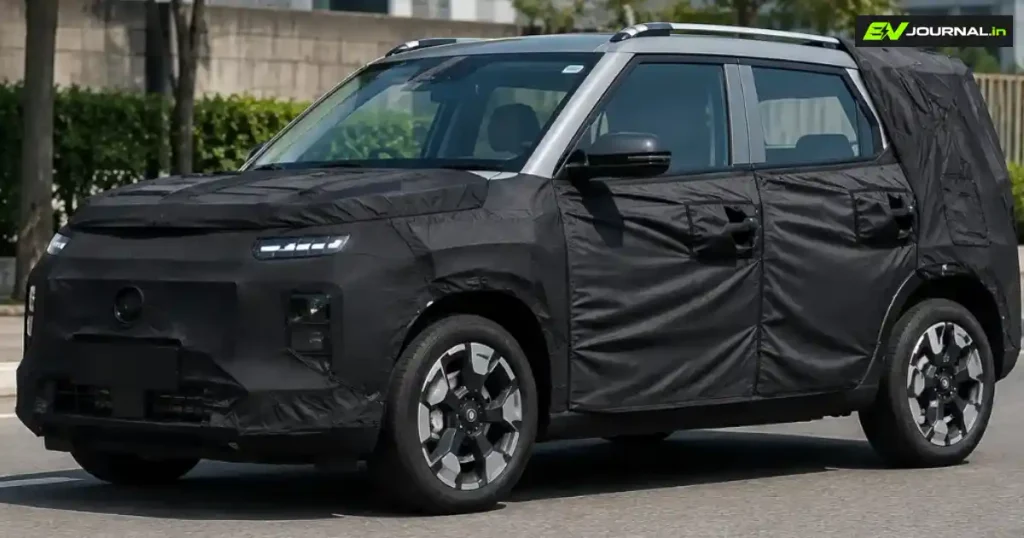
Key information regarding the upcoming Hyundai electric SUV:
- Internal codename: HE1i
- Expected name: Ioniq P (not yet officially confirmed by Hyundai Motor India)
- Body style: Compact electric SUV
- Expected launch: January 2027 (according to Autocar India); Hyundai has indicated a Q4 FY27 launch window.
- Manufacturing: Hyundai’s facility in Sriperumbudur, Tamil Nadu
- Platform: E-GMP (K) (according to industry reports)
- Battery options: Standard-range and long-range versions are expected; specific capacities for the Indian market are not yet confirmed.
- Price: Not announced
- Claimed range: Not announced
These details are based on company announcements and reports from automotive media. Final specifications will only be confirmed at the time of the official launch.
Hyundai Ioniq P Name: Is It Official?
Perhaps the most interesting development regarding this upcoming electric SUV is its potential name. Hyundai’s upcoming India-specific electric SUV is currently identified by the codename ‘HE1i’.
During an earnings call on October 29, 2026, Hyundai management mentioned the name ‘Hyundai Ioniq P’ in the context of the Indian market. Consequently, reports have begun referring to the HE1i as the ‘Ioniq P’.
‘Ioniq’ is Hyundai’s dedicated electric vehicle family. Since the company already sells the Ioniq 5 in India, the name ‘Hyundai Ioniq P’ would align well with its existing EV portfolio.
However, there has been no official confirmation regarding the final nomenclature from Hyundai Motor India. Therefore, it is more accurate to describe ‘Ioniq P’ as an expected name rather than a confirmed production name.
Expected Launch: When Will It Arrive in India?
There have also been some significant updates regarding the launch timeline.
Initially, Hyundai indicated plans to introduce its India-focused compact electric SUV by March 2027. Later, company management mentioned that the mass-market EV would be launched in the fourth quarter of the 2027 fiscal year (FY27).
According to an Autocar India report dated October 29, 2026, the vehicle is expected to make its Indian debut in January 2027.
In this context, the fourth quarter of FY27 refers to the period from January to March 2027. Thus, January 2027 should be viewed as an expected timeframe rather than a finalized, confirmed launch date.
This model could prove significant for Hyundai, as the company aims to expand its electric vehicle portfolio beyond the premium segment and reach mass-market buyers.
Platform and Battery: What Can Buyers Expect?

According to reports, the upcoming Hyundai compact EV will be based on the E-GMP (K) platform. This platform is associated with other international electric models from Hyundai, such as the Hyundai Inster EV.
The name of the platform might sound familiar, but that does not necessarily mean the battery pack, motor, or range of the India-spec model will be the same as those of the international Inster.
Standard-range and long-range versions are expected for the upcoming India-specific EV. However, Hyundai has not yet disclosed the exact battery capacity, motor output, charging time, or certified driving range for the Indian model.
The international Hyundai Inster is available with 42kWh and 49kWh battery options; however, it would be incorrect to assume these capacities as the confirmed specifications for the upcoming Indian SUV.
The final battery options and range for the Indian model will only be revealed following an official announcement.
Also Read: Ather Energy Q2 FY27 Results: Revenue Jumps 63%, Net Profit Reaches Rs. 1.26 Crore
Features: Level 2 ADAS and Next-Generation Infotainment
Regarding features, Hyundai has already hinted at some key technological highlights for its upcoming compact electric SUV.
The company has mentioned a next-generation infotainment system and Level 2 assisted driving technology.
Level 2 ADAS essentially means that the vehicle can provide assistance with acceleration, braking, and steering in certain driving scenarios. However, this does not equate to autonomous driving; the driver must remain attentive to the road and be prepared to take control of the vehicle at any time.
While Hyundai has indicated the inclusion of a next-generation infotainment system, specific details – such as screen size, software features, connected-car functions, and the audio setup—have not yet been officially disclosed.
Consequently, it would be premature to confirm a specific list of features or the equipment available across different variants.
Made-in-India Production & Battery Localisation
Hyundai’s upcoming compact electric SUV is being designed and localised specifically for the Indian market. Production is planned to take place at the company’s manufacturing facility in Sriperumbudur, Tamil Nadu.
Battery sourcing is also a critical component of this project.
According to a report by Autocar India, Hyundai plans to source battery cells from Svolt during the initial phase of production. In the longer term, the company intends to source locally manufactured battery cells through a partnership with Exide Industries.
Localising battery procurement could help manage supply-chain dependencies and manufacturing costs in the future. However, the actual impact will depend on the final pricing of the vehicle and the extent of its localisation.
It is also important to note a key distinction: local vehicle manufacturing does not necessarily mean that every single component or battery cell will be manufactured in India from the outset.
Which Electric SUVs Could the Hyundai Ioniq P Compete With?
If Hyundai positions its upcoming EV below the Creta Electric, it could intensify competition within the compact electric SUV segment. In terms of market positioning, potential rivals could include models like the Tata Punch EV, Tata Nexon EV, Mahindra XUV 3XO EV, and Kia Syros EV.
However, the actual competition will depend on the vehicle’s price, dimensions, battery options, and market positioning.
For Hyundai, the challenge goes beyond simply launching an electric SUV. The company will need to convince buyers by offering a compelling combination of range, charging experience, after-sales service, cost of ownership, and product features.
If the vehicle is priced competitively, it could provide Hyundai with an opportunity to expand its presence in the mass-market electric SUV segment.
Price and Range: What Is Confirmed So Far?
As of now, Hyundai has not announced the pricing or the official driving range for its upcoming compact electric SUV in India.
While various estimates regarding price and range may appear in online reports and market discussions, it would be premature to present these as confirmed specifications until the company releases official figures.
Buyers should specifically look out for three key details:
- Battery capacity: What will be the actual battery size for the standard and long-range versions?
- Certified range: What will be the claimed range according to ARAI or other relevant certification standards?
- Ex-showroom price: In which price bracket will Hyundai position this vehicle?
These details will determine how competitive the upcoming EV is likely to be when compared to existing electric SUVs.
What It Means for Indian EV Buyers
Hyundai’s upcoming compact electric SUV could be an interesting development for Indian EV buyers. Currently, the company’s electric vehicle portfolio in India consists of models like the Creta Electric and the Ioniq 5.
A smaller, India-focused electric SUV could enable Hyundai to reach a broader customer base.
However, buyers should not base their decisions solely on the brand name or anticipated features. Factors such as the final battery capacity, real-world range, charging support, warranty, service network, and price will be equally important. If you are planning to purchase an electric SUV in 2027, it would be worthwhile to wait for the official launch details from Hyundai.
EVJournal Says…
Hyundai’s upcoming compact electric SUV could be a key component of the company’s EV strategy for India. Codenamed ‘HE1i’—with a potential name like ‘Hyundai Ioniq P’—this vehicle stands out among upcoming EV launches due to its India-centric development, planned local manufacturing, and anticipated technological features.
However, the final name, price, battery capacity, certified range, and complete specifications have not yet been officially confirmed.
While there are reports of a debut in January 2027, the company has indicated a launch window of Q4 FY27. It remains to be seen what price point and specifications Hyundai will ultimately choose for the final product.
For Indian EV buyers, the most pressing question is: will Hyundai be able to deliver a compact electric SUV that combines a competitive price with a practical range and useful features?
A definitive answer will only emerge following the official launch.
Source note: This article is based on commentary from Hyundai’s management and reports published by Autocar India and Financial Express up to October 30, 2026.