
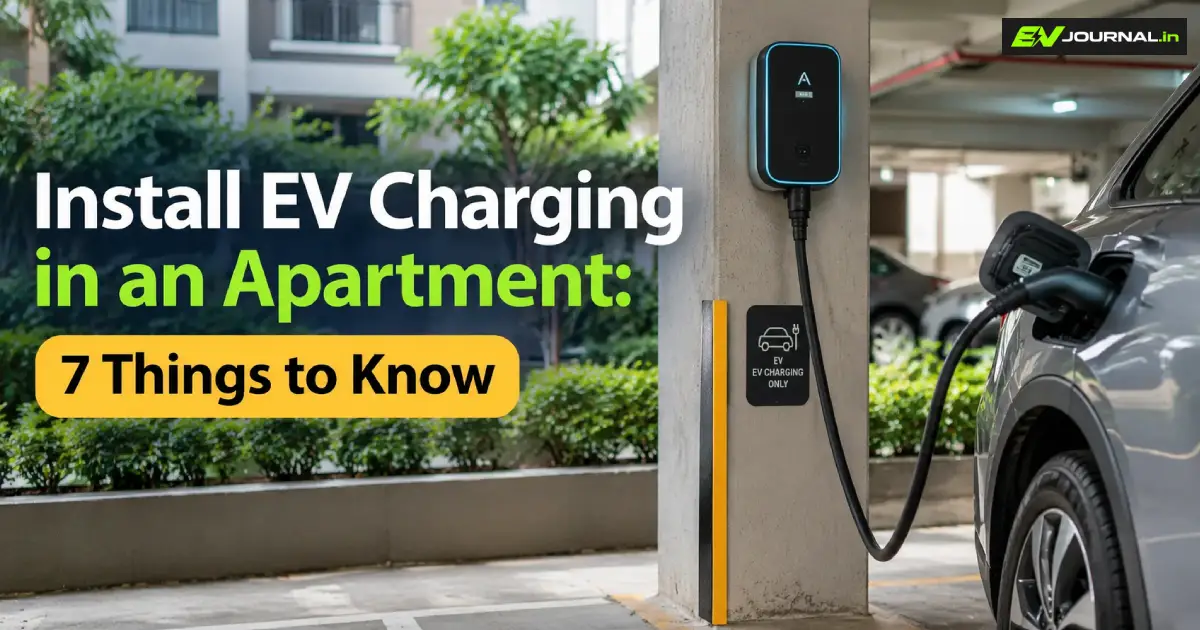
Buying an electric scooter or an electric car might be relatively easy, but arranging for charging while living in an apartment can sometimes be challenging. If you have a dedicated parking space, installing an EV charger at home can make daily charging convenient.
However, this requires navigating aspects like society permission, electrical connections, wiring, and safety requirements.
Follow EVJournal.in on X for the latest EV news & updates instantly!
If you are wondering how to install EV charging in an apartment parking space, this guide will walk you through the entire process within the Indian context – from obtaining approval from the housing society and selecting a charger to estimating installation costs and conducting final safety checks.
First, it is important to note that electric scooters and electric cars may have different charging requirements. Therefore, before purchasing a charger, be sure to check the recommendations provided by your vehicle manufacturer and the electrical capacity of your parking area.
Also Read: Fixed vs Removable Battery: Which EV Is Better in India?
1. How to Obtain Permission from the Apartment Society?
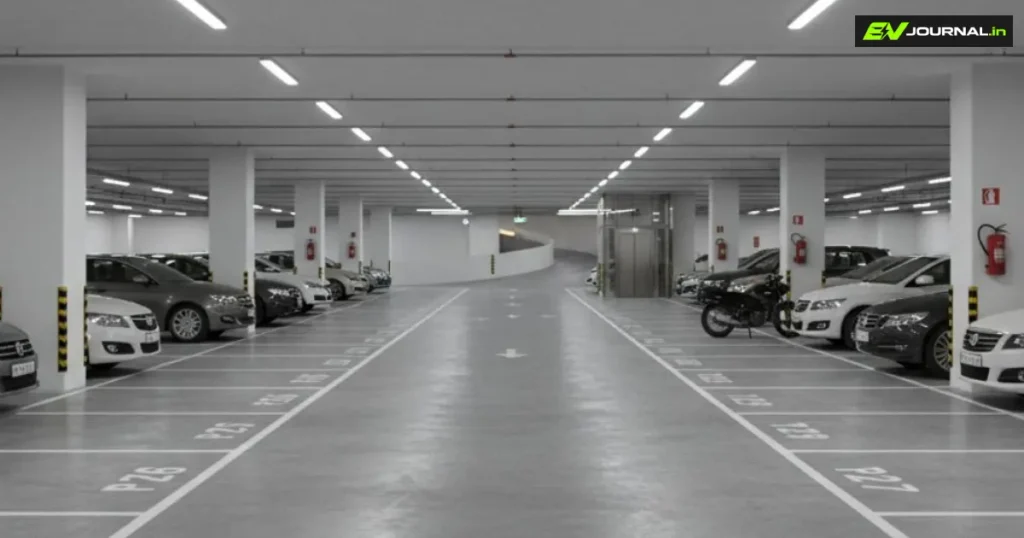
The first step toward installing an EV charger in an apartment parking area is to consult with the society management, the Resident Welfare Association (RWA), or the apartment association.
Even if you have an allotted parking space, the process may involve routing electrical cables through common areas, accessing the distribution board, or making modifications to the building’s infrastructure. Consequently, obtaining written approval before proceeding with the installation is the most practical approach.
Submit a written application to the society that includes the following details:
- The type of EV you own (electric scooter or electric car).
- The power rating of the proposed charger.
- Your parking bay number and the intended location for the charger.
- The source of the electricity supply (i.e., which meter will be used).
- Details regarding cable routing and safety measures.
- The qualified electrician or authorized installer who will carry out the installation work.
The Ministry of Power’s 2024 EV charging guidelines cover the Install EV Charging in an Apartment infrastructure in private parking areas and group housing societies. Residential owners can either use their existing electricity connection or opt for a separate metered connection from their local electricity distribution company (DISCOM).
However, it is essential to verify the specific approval process, building bylaws, and any local requirements that may apply.
Important: Do not assume that every apartment society is obligated to approve any proposed installation without an assessment. Clarify the applicable rules and the society’s valid safety requirements in writing for your specific case.
2. Check Your Electricity Meter and Sanctioned Load
Once you have received initial approval from the society, the next step is an electrical load assessment.
Check the ‘sanctioned load’ on your electricity bill. The sanctioned load refers to the electrical capacity approved for your connection. If your home already uses high-power appliances—such as air conditioners (ACs), geysers, or induction cooktops—adding an EV charger may increase your total power demand.
For instance, a 3.3 kW charger and a 7.4 kW charger have different electrical demands. Therefore, simply knowing that your home has a sanctioned load of 5 kW or 7 kW is not sufficient. An electrician should assess your existing wiring, meter, distribution board, phase supply, and the expected simultaneous load.
If your existing connection is insufficient, you may need to request a load enhancement or obtain a separate connection. Consult your local DISCOM (electricity distribution company) to understand the process and any associated charges.
The Ministry of Power’s guidelines allow residential EV owners the option to use either their existing connection or a separate, metered connection. The most suitable arrangement will depend on your current electrical setup and the requirements of your local DISCOM.
Also Read: Electric Scooter Charging Cost Per Month in India (2026): What Will You Actually Pay?
3. Choose the Right Charger for Your EV
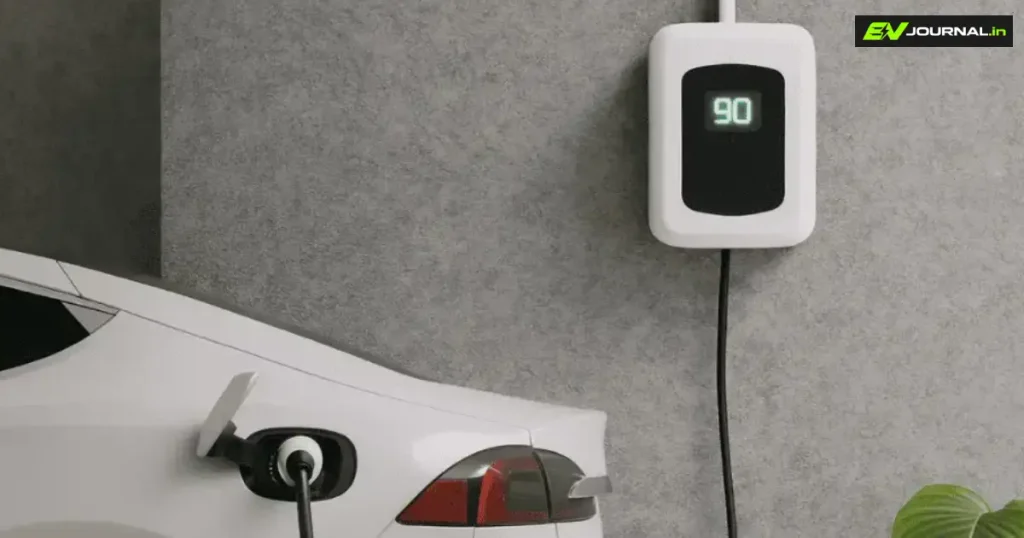
The most critical factor when selecting a charger is its compatibility with your specific vehicle.
For electric scooters:
Many electric scooters come with a portable charger that can be plugged into a standard domestic socket. However, some models may require a dedicated charging point or a setup specifically recommended by the manufacturer.
Even if your scooter’s charger is designed to operate from a standard socket, you should still have the wiring, earthing, and circuit condition of that socket inspected. Regularly charging via old wiring or an overloaded extension board can be unsafe.
For electric cars:
Options for electric cars may include a portable charger or a dedicated AC wallbox. The charger’s power rating must be compatible with the vehicle’s onboard charger, the electrical supply, and the manufacturer’s recommendations.
A 7.4 kW wallbox is not automatically the best choice for every apartment. If the available power supply, the wiring to the parking area, or the vehicle’s charging capacity does not support this rating, adjustments to the installation may be required.
A DC fast charger is generally not a standard home-charging solution for individual apartment parking spaces. It may require different equipment and a more robust electrical infrastructure.
Before purchasing a charger, confirm with the vehicle manufacturer which charging equipment is compatible and which Indian standards apply. In India, the IS 17017 series of standards is relevant for EV charging equipment.
4. How to Plan Dedicated Wiring to the Parking Area?
In apartment charging installations, the wiring route affects both cost and safety.
If your electricity meter is located near your parking bay, the cable route can be relatively short. However, if the meter is on a different floor or if the cable needs to be routed through common areas, the installation may become complex.
A qualified electrician should determine the appropriate cable size based on factors such as cable length, charger load, voltage drop, installation method, ambient conditions, and applicable electrical standards.
Do not assume that a 6 mm² copper cable will be sufficient for every installation. The cable size must be selected according to the actual load and specific installation conditions.
Important points regarding wiring:
- Use a properly designed circuit for EV charging.
- Ensure the cable is routed through a suitable conduit or a protected cable tray.
- Do not connect the charger to existing common lighting or utility circuits without a proper assessment.
- Avoid loose connections, exposed wires, and temporary extension arrangements.
- Cable routing should be planned so that it does not obstruct pedestrians or vehicles.
- Consider factors like exposure to water, the risk of accidental impact, and fire safety within the parking area.
Devices such as MCBs (Miniature Circuit Breakers), residual-current protection, and surge protection should be selected based on the installation design and the requirements specified by the charger manufacturer.
Appropriate residual-current protection is particularly important for EV charging equipment; a qualified electrician should determine the exact type of device based on applicable standards and the charger’s specifications.
5. Do Not Ignore Earthing and Safety Testing
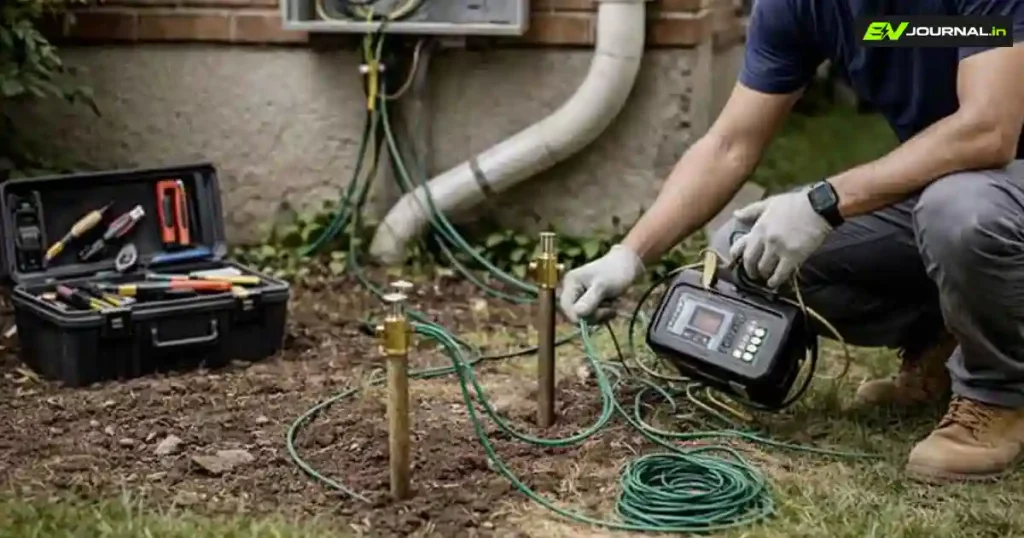
The fact that charging begins after an EV charger is installed does not prove that the installation is safe.
Before commissioning, have a qualified electrician test the earthing, protective devices, cable connections, and the circuit. It is also essential to follow the safety requirements specified in the charger’s installation manual.
At the time of final handover, check the following:
- Testing of earthing and electrical protection systems.
- Proper operation of the MCB and residual-current protection.
- Condition of cable insulation and connections.
- Correct installation and functioning of the charger.
- Metering and billing arrangements.
- Installation documentation and the electrician’s completion report, where applicable.
If multiple EV chargers are being installed within a housing society, assessing the building’s overall electrical capacity and the demand from simultaneous charging becomes even more critical.
6. Cost of Installing an EV Charger in an Apartment
The total cost of installing an EV charging setup in an apartment parking area is not fixed. In addition to the price of the charger itself, expenses may include wiring, cable routing, protective devices, labour, earthing, and potentially the cost of increasing the electrical load.
The figures provided below are merely initial budgetary estimates; they are not verified market quotes or guaranteed current prices. Actual quotations should be obtained based on the specific location, brand of equipment, cable length, and site conditions.
Apartment parking mein EV charging installation ka total cost fixed nahi hota. Charger ki price ke alawa wiring, cable route, protective devices, labour, earthing aur possible load enhancement ka expense bhi aa sakta hai.
Neeche diye gaye figures sirf initial budgeting estimates hain, verified market quotations ya guaranteed current prices nahi. Actual quotation location, equipment brand, cable length aur site conditions ke hisaab se lena chahiye.
| Expense | Indicative budget |
|---|---|
| Basic charging point or portable charging arrangement | Rs. 5,000–Rs. 15,000 |
| AC wallbox for a car | Rs. 20,000–Rs. 45,000 |
| Wiring, protection and installation work | Rs. 10,000–Rs. 40,000+ |
| Possible additional electrical or civil work | After the site assessment |
These categories may overlap; therefore, do not simply add them together to estimate the final installation cost. Some charger packages include installation, while others charge separately for wiring and electrical protection.
If the parking bay is located far from the meter, the cost for cables and conduits may increase. Additional expenses may also arise if a separate meter, load upgrade, panel modifications, or civil work are required.
When comparing installation quotes, ensure that there is a clear breakdown of costs for the charger, cable length, protective devices, earthing, labour, taxes, and testing.
7. Individual Meter or Separate EV Meter — Which is Better?
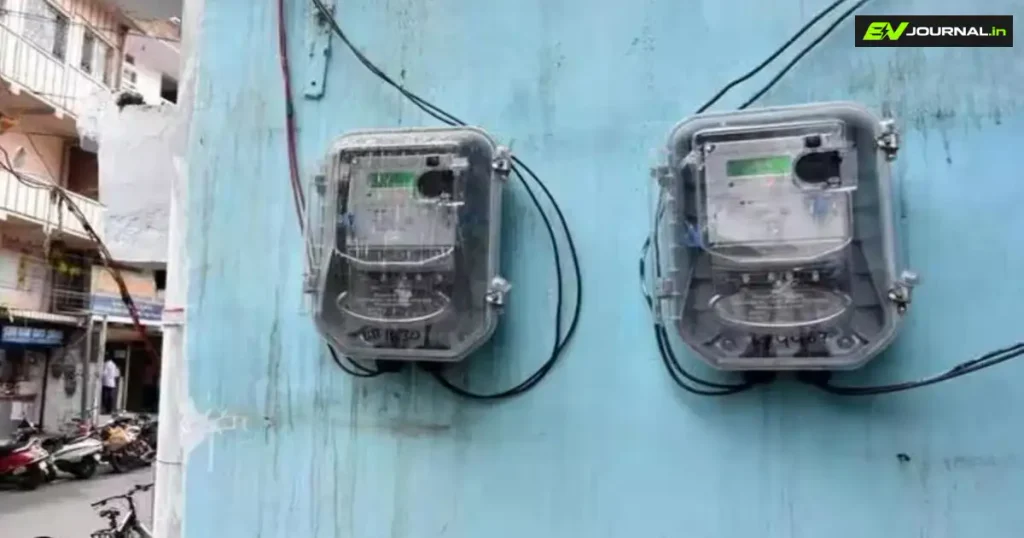
For charging in an apartment complex, the electricity billing arrangement should be decided in advance.
Option 1: Charging via your existing meter
If the electrical setup and applicable regulations permit, the EV charger can be operated using your existing residential connection. In this arrangement, the electricity consumed for charging will be included in your existing utility bill.
Option 2: Separate metered connection
In some cases, a dedicated EV meter or a separate connection may be advantageous. This makes it easier to track electricity consumption for charging separately from your household usage. However, you will need to verify the availability of such a connection, the applicable tariff, and installation charges with your local DISCOM (electricity distribution company).
Option 3: Society-managed billing
If the apartment complex uses common charging infrastructure, the housing society or the charging service provider may manage billing based on actual consumption. In such cases, ensure you understand the tariff, service fees, and payment terms beforehand.
There is no single “best” billing arrangement for every apartment. The choice should be based on the location of your meter, ownership arrangements, and the specific policies of your housing society.
What if the Society Delays Granting Permission?
If approval from the housing society is pending, do not rely solely on verbal discussions; instead, submit a formal written application and keep a record of any responses received.
If the committee has concerns regarding safety, providing a site assessment report from an electrician along with a proposed wiring plan can be helpful. If a disagreement persists, check the applicable state regulations, local DISCOM (electricity distribution company) guidelines, and relevant housing society bylaws.
Avoid installing cables in common areas or making modifications to the electrical distribution board without prior approval. Doing so can lead to safety risks and disputes with the housing society.
EVJournal Says…
It is possible to install EV charging in an apartment parking area; however, the process involves more than just purchasing a charger. It also requires coordination with the housing society, an assessment of the electrical load, proper wiring, the installation of protective devices, and thorough testing.
If you use an electric scooter, a portable charger provided by the manufacturer—used with a properly inspected charging point – may be sufficient for your needs. For an electric car, a dedicated AC wallbox is generally more convenient; however, base your final decision on the available electrical capacity and the compatibility of the charging equipment with your vehicle.
EVJournal.in Verdict: Before beginning any installation, ensure you obtain written approval, a site assessment by a qualified electrician, and an itemized quotation. Rather than opting for the cheapest setup, prioritize a solution that is safe, compatible, and practical for long-term use.
Note: All electrical installations must be carried out by a qualified professional. Always confirm the final requirements with your vehicle manufacturer, your apartment association, and your local DISCOM.
Also Read: Top 5 Long-Range Electric Scooters in India Under Rs. 1.5 Lakh (2026 Edition)