
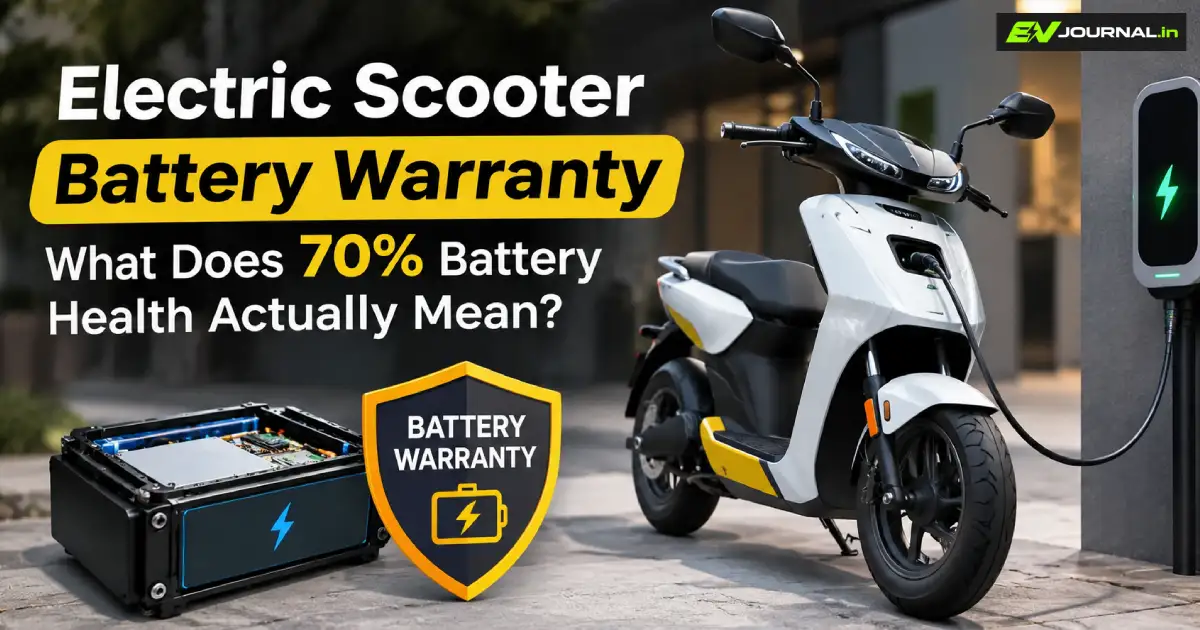
When purchasing an electric scooter, buyers usually focus on battery capacity, claimed range, and charging time. But from a long-term ownership perspective, the Electric Scooter Battery Warranty is equally important.
Lithium-ion batteries can degrade over time, which can affect the scooter’s available range and overall performance. Therefore, when choosing a scooter, it’s important to understand not only the battery specifications but also its warranty conditions.
Follow EVJournal.in on X for the latest EV news & updates instantly!
For this reason, electric scooter manufacturers offer different coverage periods and performance-related conditions with battery warranties. Some extended warranty plans also include a 70% battery health threshold.
But does this mean that the manufacturer will provide a free replacement if the battery health of an electric scooter reaches 70%? Not necessarily.
The 70% State of Health (SoH) threshold is not a universal rule for every manufacturer or every warranty plan. The exact terms of the battery replacement warranty depend on the coverage duration, kilometer limit, and applicable exclusions.
In this guide, we’ll explain what 70% battery health actually means, how Electric Scooter Battery Warranty work, and what important conditions buyers should pay attention to in case of battery degradation.
Also Read: Electric Scooter vs Petrol Scooter: Which Saves More Money in the Long Run?
What Does 70% Battery Health Actually Mean?
Electric scooter battery health is generally expressed through State of Health (SoH). SoH represents the battery’s current usable capacity compared to its original reference capacity.
For example, if an electric scooter initially had a 3 kWh battery installed and tested to have a current usable capacity of 2.1 kWh, a simplified calculation would result in a battery SoH of 70%.
Battery SoH = (Current Usable Capacity ÷ Original Usable Capacity) × 100
This means the battery is retaining approximately 70% of its original reference capacity.
However, battery health and the scooter’s displayed range are not the same thing. Actual riding range changes depending on traffic, riding speed, temperature, tire pressure, rider weight, and riding mode.
Similarly, a decrease in the displayed range on the dashboard does not automatically mean battery health is at 70%.
Accurately assessing battery SoH may require a manufacturer-approved diagnostic procedure and relevant battery data.
Why Does Electric Scooter Battery Health Decrease?
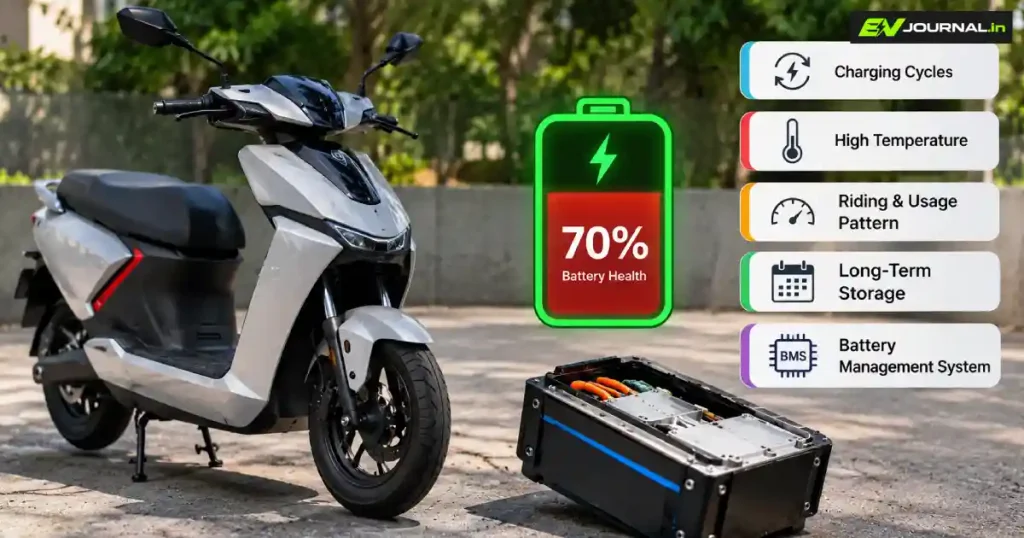
Lithium-ion batteries used in electric scooters age gradually through repeated charging and discharging cycles.
Battery degradation is a natural process, but its rate is not the same for every scooter.
Some important factors can affect battery health:
1. Charging and Discharging Cycles
Repeated charging and discharging gradually changes the battery’s internal chemical processes. This can cause available capacity to decrease over time.
2. Temperature Conditions
High temperatures can accelerate battery aging. Excessive heat exposure can affect battery performance and long-term durability.
3. Riding and Usage Pattern
Frequent high-load operation, demanding riding conditions, and heavy usage can create additional stress on the battery.
4. Long-Term Storage
Leaving an electric scooter unused for extended periods with a low battery charge can be harmful to the battery. Manufacturers generally recommend following recommended storage and charging instructions.
5. Battery Management System
The Battery Management System (BMS) monitors battery cells and manages charging, discharging, and temperature-related protection functions.
However, having a BMS does not mean that battery degradation will be completely stopped.
Does 70% Battery Health Guarantee Free Replacement?
This is the most important question for buyers.
The answer depends on the manufacturer and the warranty plan purchased.
Some manufacturers specifically cover battery performance degradation, while some warranty policies primarily focus on manufacturing defects and specified component failures.
Therefore it would be incorrect to consider 70% SoH as an industry-wide replacement guarantee.
Differences can be seen in the published warranty information of Ather Energy, Ola Electric, TVS Motor, Hero MotoCorp VIDA and Bajaj Chetak.
Also Read: Ather Energy Q2 FY27 Results: Revenue Jumps 63%, Net Profit Reaches Rs. 1.26 Crore
Electric Scooter Battery Warranty: Brand-Wise Details
1. Ather Energy – Eight70 Battery Warranty
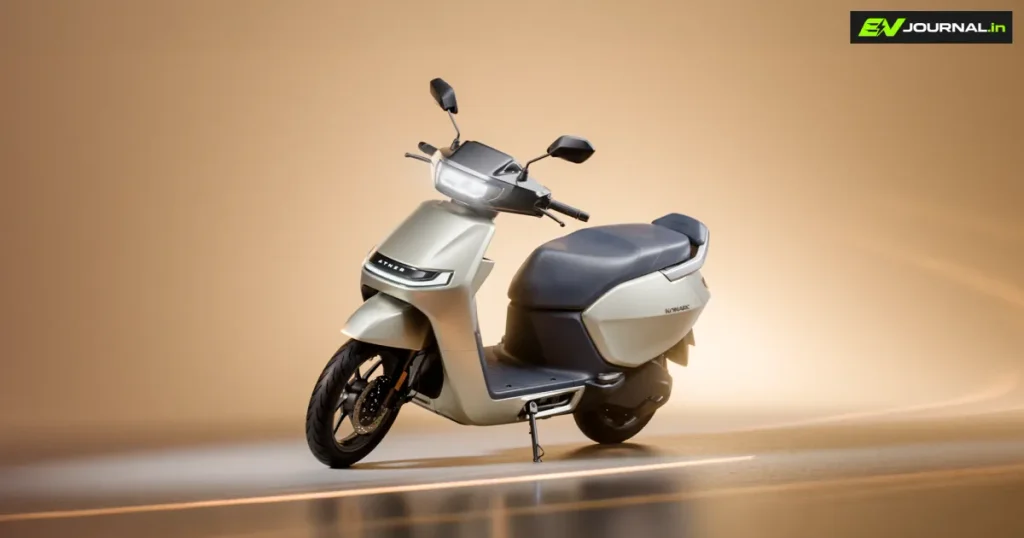
Ather Energy’s 870 warranty program is particularly interesting from the perspective of battery degradation.
According to the company’s official warranty FAQ, the Eight70 program extends battery coverage up to a total of 8 years or 80,000 km, whichever comes first.
This program provides eligible battery repair or replacement coverage if battery health drops below 70% within the specified coverage period.
Important points:
- Total coverage: 8 years or 80,000 km
- Battery health threshold: Below 70%
- Plan type: Additional warranty program
- Availability: AtherStack Pro eligibility and applicable purchase conditions
- Warranty transfer: Transferable to the next owner as per Ather FAQ
In Ather’s FAQ, reference to 10,000 km vehicle usage is also given for the reliability of battery health data.
Buyers should verify the exact terms and exclusions of the Eight70 before purchasing.
2. Ola Electric – Battery Top-up Warranty
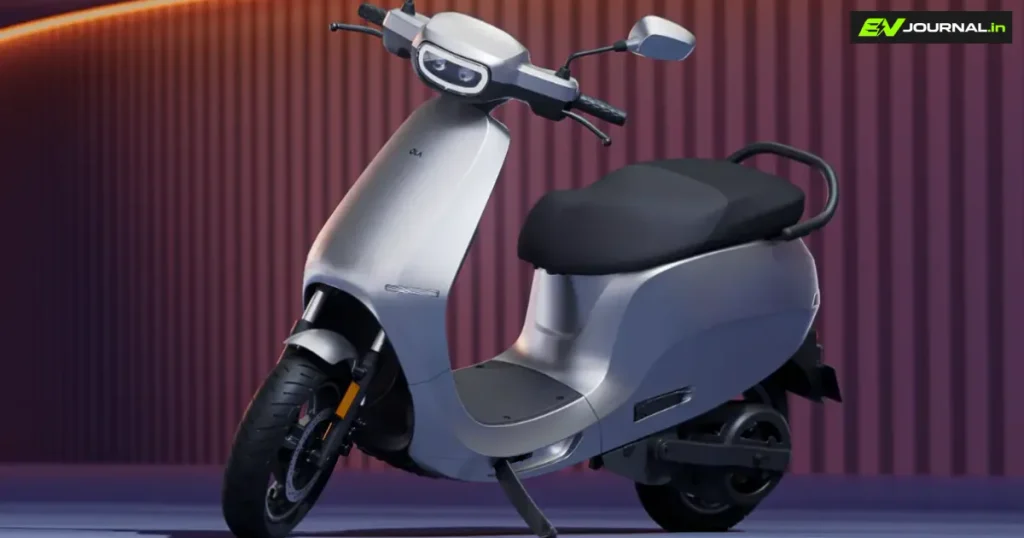
Ola Electric also offers additional Battery Top-up Warranty programme.
According to the company’s published terms, eligible battery plans cover battery performance degradation below 70%, along with manufacturing or design-related defects.
However, coverage duration and kilometer limits may vary depending on the plan purchased and eligible scooter model.
Ola’s published terms explain the standard comprehensive battery warranty and additional top-up coverage separately.
Therefore, buyers should check eligibility based on their scooter’s invoice, delivery date, and applicable warranty certificate.
3. TVS iQube – Battery Warranty
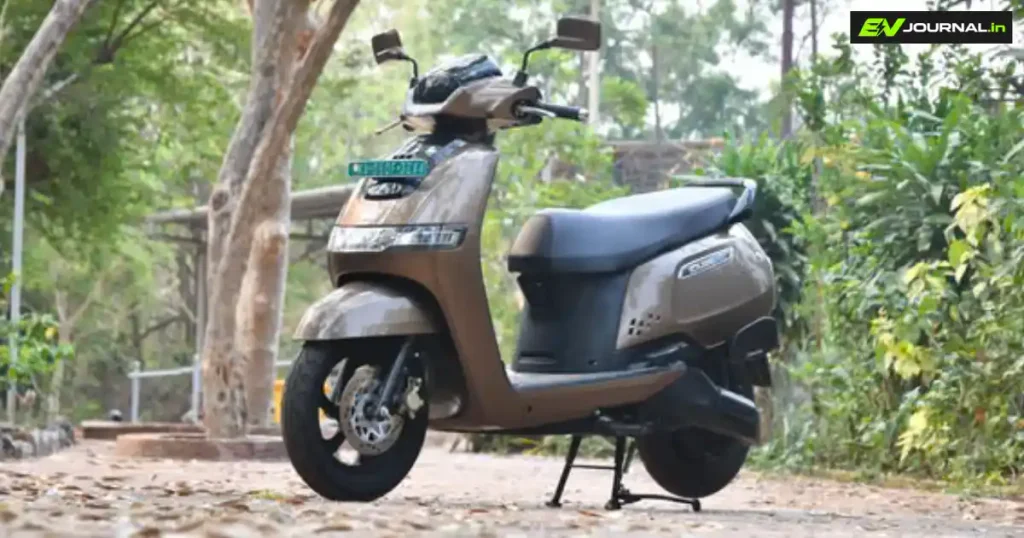
It’s also important to understand the TVS iQube’s warranty terms.
According to TVS’s published warranty information, 3 years or 50,000 km coverage on vehicle, battery, motor, controller and charger is applicable for certain iQube variants, whichever comes earlier.
Warranty primarily covers manufacturing defects and workmanship-related conditions.
TVS’s published iQube FAQ also explains battery performance and degradation. According to the company, approximately 20–30% battery attenuation can be expected around 60,000–70,000 km, although actual results depend on ambient temperature, riding pattern and other factors.
Important distinction: TVS’s cited standard warranty information does not specify a universal 70% battery-health replacement guarantee like the Ather 870.
Also Read: Best Electric Scooters for Apartment Residents (2026): What Should You Buy?
4. Hero MotoCorp VIDA – Battery Warranty
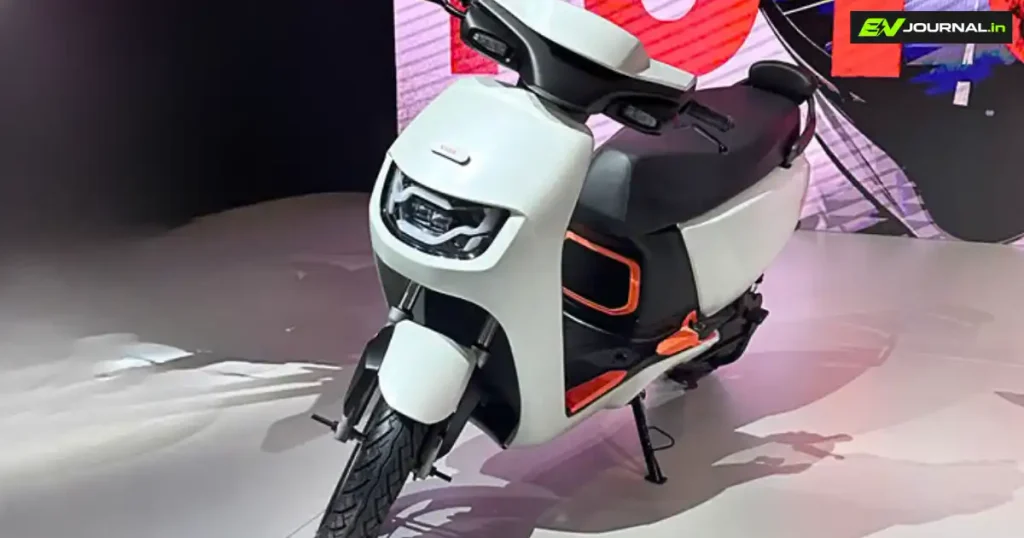
VIDA’s standard traction battery warranty and extended warranty programs should be understood separately.
According to VIDA’s published warranty information, standard traction battery coverage is 3 years or 30,000 km, whichever comes earlier.
The company also offers additional extended coverage.
The published terms of the VIDA Warranty++ provide for extending the battery warranty to 5 years and/or 60,000 km, subject to applicable conditions.
Battery performance degradation of more than 30% is also covered under this program.
Here, 30% degradation means battery performance falling below 70% compared to the original reference capacity.
However, exact eligibility, model applicability, and conditions of the purchased plan must be verified.
5. Bajaj Chetak – Battery Warranty
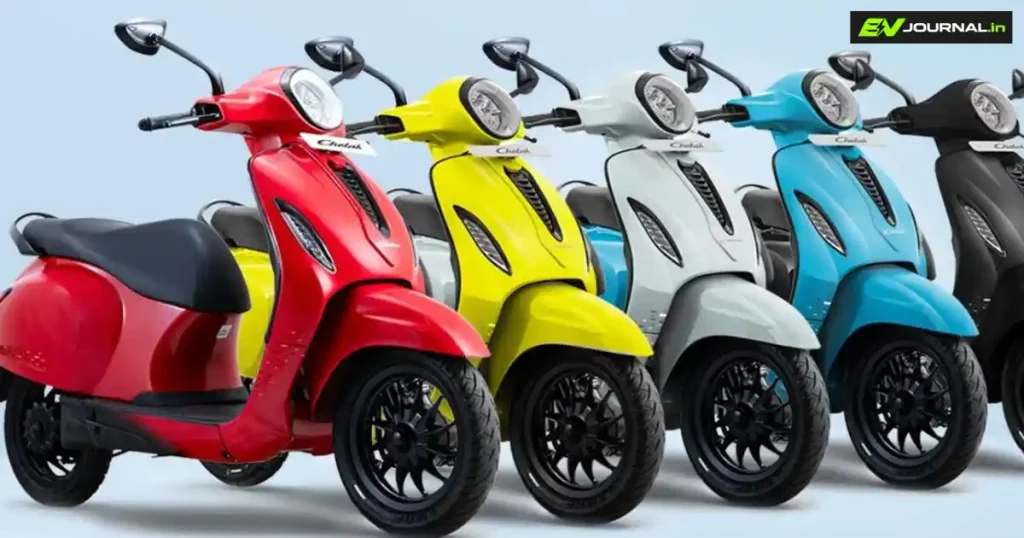
According to the Bajaj Chetak’s official FAQ, Chetak electric scooters offer a 3-year or 50,000 km warranty for the vehicle and lithium-ion battery, whichever comes first.
According to the company’s published terms, the decision on warranty repair or replacement is at the manufacturer’s discretion, subject to applicable conditions.
Chetak also offers additional extended warranty plans, whose coverage is subject to similar guidelines and applicable conditions as the standard warranty.
The official FAQ does not specify an explicit 70% battery health replacement threshold like the Ather Eight70.
Important: Brand-Wise Warranty Comparison
| Manufacturer | Published warranty information |
|---|---|
| Ather | Eight70: 8 years/80,000 km; below 70% SoH condition |
| Ola Electric | Battery Top-up: plan-specific 70% threshold |
| TVS iQube | Certain variants: 3 years/50,000 km |
| विदा | Extended coverage: up to 5 years/60,000 km; over 30% degradation condition |
| Bajaj Chetak | 3 years/50,000 km standard coverage |
These are examples of published manufacturer terms, not a universal comparison of every currently available scooter variant. Model year, purchase date, warranty add-ons and policy revisions can change the applicable coverage.
How Can You Check Your Electric Scooter Battery Health?
If you feel that the range of the electric scooter has reduced significantly compared to before, then getting the battery health checked is a sensible step.
But battery degradation should not be concluded only on the basis of displayed range.
The following steps may be useful:
1. Check the Manufacturer’s App
Some electric scooter manufacturers provide battery-related information in their mobile applications. Available data may vary depending on the model and software version.
2. Visit an Authorized Service Center
You can request a diagnostic check from an authorized service center for battery health assessment.
3. Request Battery Diagnostic Information
Inquire about battery health report, diagnostic findings and battery-related fault information available from the service centre.
4. Compare Real-World Range
Observe the range of the scooter in similar route, riding mode, speed and load conditions. This can help determine performance changes, although it is not a replacement for a formal SoH test.
5. Keep Your Service Records
Service invoices, battery diagnostic reports and warranty documents can be useful at the time of future warranty claims.
What Can Void Your Electric Scooter Battery Warranty?
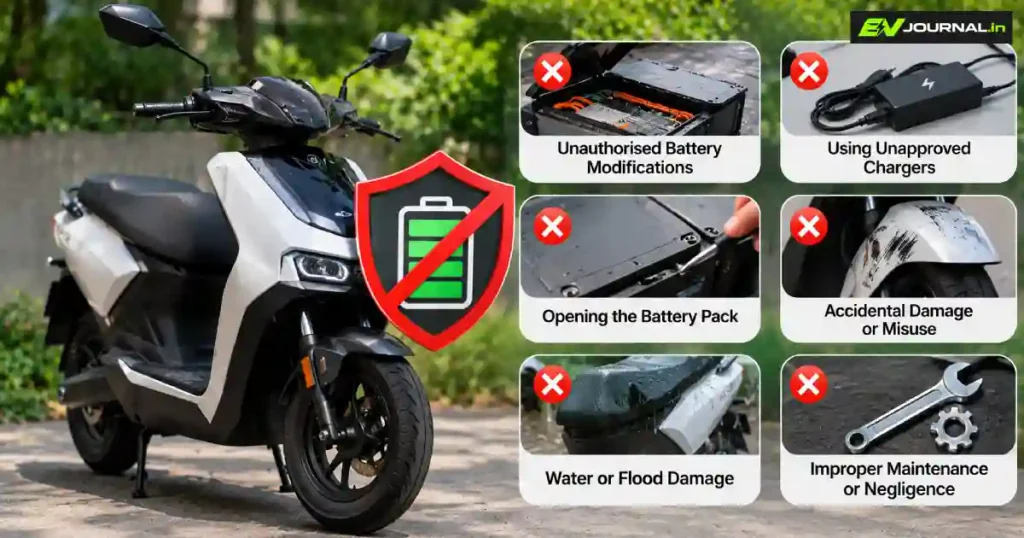
Electric Scooter Battery Warranty is not limited to coverage duration only. Manufacturers include certain specific activities and damage conditions in warranty exclusions.
Common exclusions may include:
- Unauthorized battery modifications.
- Forcefully opening the battery pack.
- Use of unapproved chargers.
- Physical damage due to accidents or misuse.
- Water or flood damage, where excluded by policy.
- Damage resulting from negligence or improper maintenance.
- Alteration of battery identification details.
However, exclusions are manufacturer-specific. Every brand’s warranty policy may be different.
For example, forcefully opening the battery cover, unauthorized battery swapping and not using the recommended charger are mentioned among the warranty limitations in the published warranty document of TVS iQube.
Therefore, it is important to read the owner manual and warranty policy carefully after purchasing the scooter.
What Should You Check Before Buying an Electric Scooter?
Just looking at the years of Electric Scooter Battery Warranty is not sufficient when purchasing an ev scooter.
Buyers should compare the following details:
- Battery Warranty Duration: How many years and kilometers is the battery covered?
- Battery Health Threshold: Does the policy mention a specific SoH degradation threshold?
- Standard vs. Extended Warranty: Is an extra payment required for additional coverage?
- Warranty Exclusions: In what situations might a battery claim be rejected?
- Replacement Coverage: Does the warranty cover repair, replacement, or both?
- Transferability: Will the remaining warranty transfer to the next owner upon reselling the scooter?
- Claim Procedure: What is the authorized service center’s process for battery diagnostic and warranty claims?
Comparing these details can give buyers a better understanding of long-term battery ownership.
EVJournal Says…
Focusing solely on the 70% battery health threshold is not sufficient when evaluating Electric Scooter Battery Warranty.
The 70% threshold plays an important role in programs like the Ather Eight70 and Ola’s selected battery top-up plans. However, looking at the published warranty conditions of TVS, VIDA, and the Bajaj Chetak, it becomes clear that each manufacturer’s coverage structure is different.
Buyers should carefully check the standard battery warranty, extended warranty, performance degradation conditions, and exclusions before purchasing a scooter.
Most importantly, a battery health of 70% does not automatically mean every electric scooter owner will receive a free replacement. Warranty claim will be eligible only if the applicable conditions of the specific manufacturer policy are satisfied.
A well-understood Electric Scooter Battery Warranty can make ev scooter ownership more predictable and help buyers make a better-informed purchasing decision.
Also Read: Bondada T1 Electric Two-Wheeler Unveiled at Rs. 59,999; Pre-Bookings Open