
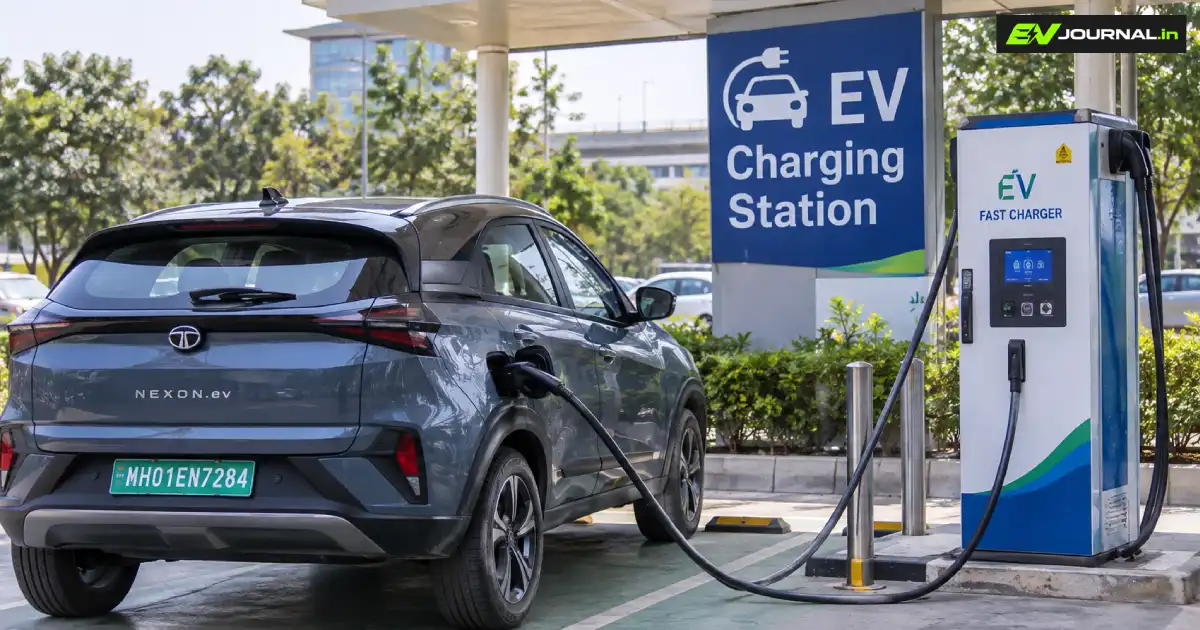
Before purchasing an electric vehicle, people often ask a simple question: where will they charge their EV if they don’t have charging facilities at home?
A practical solution to this is public EV charging stations. In India, EV charging facilities are now available in shopping malls, office complexes, hotels, parking areas, petrol pumps, and even on highways.
Follow EVJournal.in on X for the latest EV news & updates instantly!
But once you reach a public charging station, which charger should you choose? What’s the difference between AC and DC charging? How should you charge your electric car or scooter? And most importantly, how much will charging cost?
If you’re also looking for answers to these questions, this guide is for you. In this article, we’ll explain in simple terms how Public EV Charging Stations in India work and what to keep in mind when using them.
Also Read: How to Install EV Charging in an Apartment Parking in India: 7 Things to Know
What is a Public EV Charging Station?
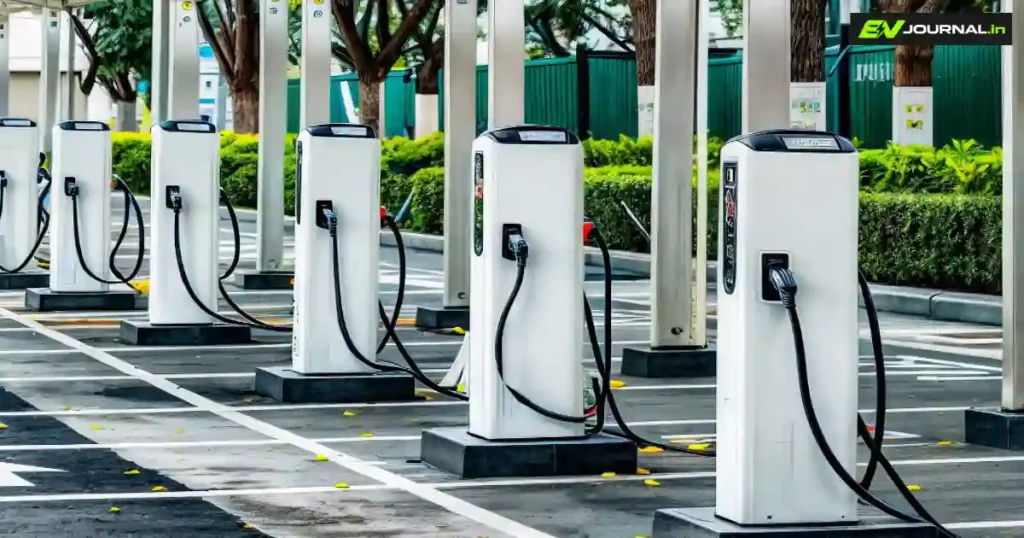
A public EV charging station is a location where electric vehicle owners can charge their vehicle batteries. These stations are generally available for public access, but some locations may have different conditions for entry, parking, or charging.
You can find public charging stations at the following locations:
- Shopping malls and commercial complexes
- Hotels and restaurants
- Office buildings
- Public parking areas
- Petrol pumps
- Railway stations and airports
- Highways and expressways
The Ministry of Power’s guidelines of September 17, 2024, provide provisions for private, semi-public, and public charging locations. This includes group housing societies, offices, hospitals, commercial complexes, and highways.
The main advantage of public charging stations is that EV owners don’t always need to have charging facilities available at home. Even during long-distance travel, you can use compatible charging stations available along the route.
AC vs DC Charging: What’s the Difference?
Before using a public charging station, it’s important to understand the difference between AC and DC charging. Both methods deliver electricity to the vehicle’s battery, but the conversion process is different.
1. AC Charging
AC stands for Alternating Current. In AC charging, electricity travels from the charger to the vehicle in AC form. The vehicle’s onboard charger converts this to the DC power required by the battery.
AC charging is generally slower than DC fast charging. Therefore, it can be useful in locations where the vehicle will be parked for a few hours.
Examples:
- Shopping malls
- Offices
- Hotels
- Residential parking
- Long-duration parking areas
The actual speed of AC charging depends on the vehicle’s onboard charger’s capacity and the charging point’s output. Simply having a high-power AC charger available will not charge the vehicle at the same speed.
2. DC Fast Charging
DC stands for Direct Current. In DC charging, the charger supplies DC power directly to the battery. The major part of the conversion takes place inside the charging station.
DC fast charging can generally be much faster than AC charging. It is useful on highways and other locations where drivers need to charge the battery in a relatively short time.
But the speed of DC fast charging is also not fixed. This depends on the vehicle’s maximum DC charging capacity, battery temperature, current battery percentage, and charger output.
Simple difference: AC charging may be practical for longer parking durations, while DC fast charging is useful for shorter stops and highway journeys.
Also Read: Mahindra BE 07 Spotted Charging in Karnataka: Latest Spy Shots Reveal More Details
EV Charging Connectors: How to Choose the Right Charger for Your Vehicle?
Not every electric vehicle is compatible with every charging connector. Therefore, it is important to check your vehicle’s charging standard before arriving at a charging station.
Different charging standards are used for different EV segments and models in India.
| Connector / Standard | General use |
|---|---|
| CCS2 | For DC fast charging of many modern electric cars |
| Type 2 | AC charging; compatible cars and some other EV setups |
| CHAdeMO | DC charging in some electric cars |
| Bharat AC-001 | Specified low-power AC charging applications |
| Bharat DC-001 | Specified low-power DC charging applications |
This table is for general information. Not every connector is available in every vehicle. Some two-wheelers and three-wheelers use proprietary connectors or different charging arrangements.
Important: Physically fitting the charger connector is not enough. There must also be electrical and communication compatibility between the vehicle and the charging station.
Before starting charging, check the supported connectors and maximum charging capacity in your vehicle owner’s manual or on the manufacturer’s official website.
How to charge your car at a public EV charging station?
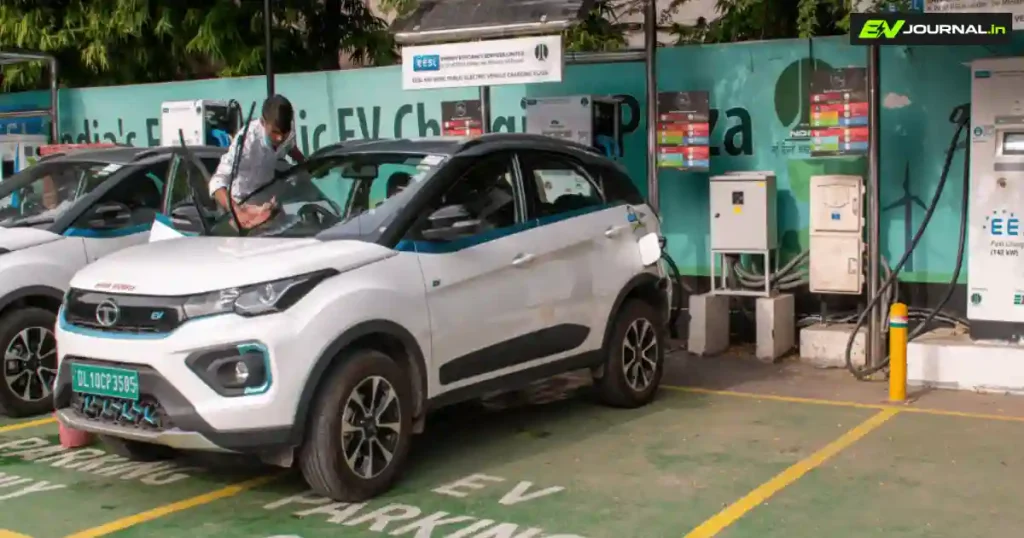
If this is your first time using a public charging station, the process may seem a little confusing at first. But the basic steps are quite simple.
Step 1: Locate a Charging Station
First, search for available charging stations near your route.
You can use the official apps or websites of EV charging network operators for this. Information about charging locations may also be available on some navigation platforms.
When selecting a station, check these details:
- Station’s exact location
- Available charger type
- Connector compatibility
- Charger’s rated power
- Current availability status
- Charging price
- Operating hours and access conditions
One important thing: Just because a charger appears available on the app doesn’t mean it will definitely be in working condition when you arrive. If possible, check the latest status before traveling.
Step 2: Select a Compatible Charger
After arriving at the station, identify a compatible charger for your vehicle.
If your car supports CCS2 DC charging, select a compatible CCS2 DC charger. If your vehicle only supports AC charging, choose an AC charging point accordingly.
Also check the charger’s maximum power. If your car supports a maximum of 50 kW DC charging, installing a 120 kW charger will not automatically charge the car at 120 kW.
Step 3: Start a Charging Session
The process for starting charging may vary depending on the operator and charger.
Generally, you may need to use one of these methods:
- Selecting a charger via the mobile app
- Scanning the QR code on the charger
- Using an RFID card
- Starting a session using the operator’s supported payment/authentication method
Follow the on-screen instructions. Some chargers require you to first connect the connector to the vehicle and then start the session via the app. The order may be different for others.
Step 4: Monitor Charging Progress
Once charging starts, you can check the charging status on the app or charger display.
You can generally find the following information:
- Current battery percentage (if vehicle data is available)
- Delivered energy in kWh
- Charging power
- Session duration
- Estimated cost
Don’t expect the charging speed to remain the same. Charging power may decrease as the battery percentage increases.
Step 5: Stop Charging and Return the Connector
When the required battery level is reached, stop the charging session according to the app, charger display, or vehicle instructions.
After that, safely unlock the connector, remove it, and return it to its designated holder.
Don’t forget to check the final bill or payment confirmation after the charging session is complete.
How much does public EV charging cost?
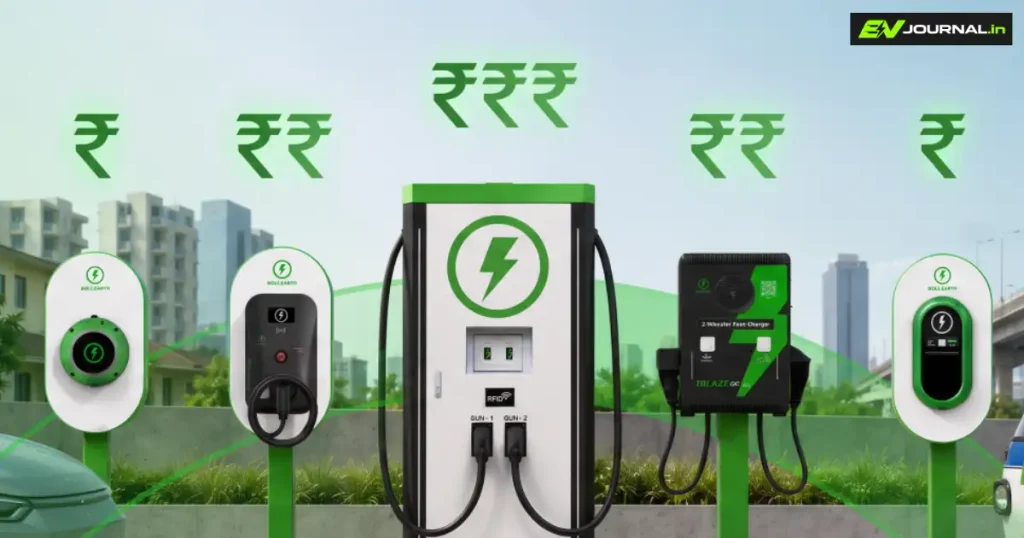
The cost of public EV charging is a common concern, but there is no single fixed price applicable across India.
Charging costs can vary depending on location, charging operator, applicable electricity tariff, service charges, and other applicable fees.
Generally, a charging bill may include the following components:
- Electricity consumed, usually based on kWh
- Operator’s applicable service charges
- Parking fee, if separately applicable
- Taxes or other disclosed charges
How to calculate charging costs?
Let’s understand a simple calculation.
Suppose 20 kWh of electricity is added to your EV battery and the charging operator’s displayed energy rate is Rs. 15 per kWh.
So:
20 kWh × Rs. 15 = Rs. 300
This means the energy charge will be Rs. 300. Applicable service charges, parking fees, and taxes may be added to the final bill.
Therefore, it’s best to check the final pricing details on the operator’s app or charger display before making a payment.
You can also calculate the estimated charging cost and time using the Public Charging Calculator available on NITI Aayog’s e-Amrit portal.
How to find a public EV charging station in India?
You can use the mobile apps and websites of charging network operators to locate an EV charging station.
When searching for a station, don’t select a location based solely on distance. Also check these points:
- Is the charger compatible with your EV?
- Is the required connector available?
- Is the charger showing in operational status?
- Is the charging price clearly stated?
- Is the station open for public access?
- Are parking or entry charges applicable?
When planning a long-distance journey, it’s also useful to identify a backup charging station. This will give you an alternative option if the first charger is unavailable.
Safety Tips When Using Public EV Charging Stations
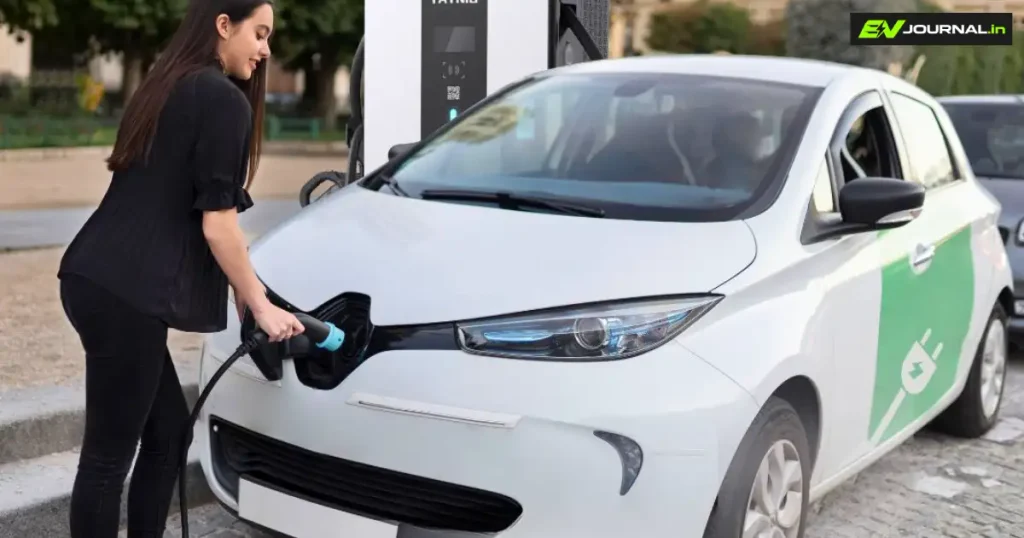
The charging process is generally straightforward, but some basic safety rules are important.
The charging process is generally straightforward, but it is important to follow some basic safety rules.
- Visually inspect the connector and charging cable before starting charging.
- Do not use damaged, exposed wires, or visibly faulty connectors.
- Avoid handling electrical connectors with wet hands.
- Do not leave the charging cable under the vehicle or in the path of traffic.
- Follow the charger and vehicle instructions.
- Properly return the connector after charging is complete.
- If an emergency or fault indication occurs, stop the session and contact the operator.
Another important point: Follow the manufacturer’s instructions when charging the EV. Do not forcefully plug or unplug any connectors.
Check These 7 Things Before Using a Public Charging Station
To ensure a smooth charging experience, follow this checklist before arriving at the station:
- Connector compatibility: Whether the charger supports your EV.
- Charging power: Select a charger based on the vehicle’s maximum AC/DC charging capacity.
- Availability: Check the latest charger status on the app.
- Charging price: Check the per-kWh rate and additional charges first.
- Payment method: Whether an app, QR code, RFID, or other supported payment option is available.
- Location access: Whether the station is open to the public or for a specific customer group.
- Backup option: Identify an alternative charging location on long journeys.
EVJournal Says…
Can you rely on public EV charging stations?
Public EV charging stations play an important role in making electric vehicle ownership more convenient in India. Especially for buyers who live in apartments, travel regularly on the highway, or don’t have access to dedicated home charging facilities.
But simply looking at the total number of public charging stations isn’t enough before purchasing an EV. You should also check the availability, operational status, charging speed, and cost of compatible chargers on your regular route.
If your daily running is predictable and home or workplace charging is available, you can use public charging for occasional top-ups and as a backup for long journeys.
But if you are going to depend completely on public charging, it is important to practically check the charging network in your area before purchasing.
Final advice: Before buying an EV, check the available charging stations near your home, office and regular travel routes. Not only the claimed range, but also the charging convenience will decide your ownership experience.
Also Read: Electric Scooter vs Petrol Scooter: Which Saves More Money in the Long Run?