
Planning to buy an electric scooter, but don’t have charging facilities at home? If you live in an apartment, a rented flat, or don’t have a charging socket in your parking lot, it’s perfectly normal to wonder whether buying an electric scooter is right for you.
There’s a lot of interest in electric scooters these days, but just looking at the price and range isn’t enough before buying an electric scooter. Charging facilities are just as important.
The good news is that not having home charging doesn’t mean you can’t use an electric scooter. However, buying an electric scooter without proper planning can create inconvenience later.
In this guide, we’ll explain how to use an electric scooter without home charging, how to check for public charging stations, and what to consider before purchasing one.
Also Read: Top 5 Long-Range Electric Scooters in India Under Rs. 1.5 Lakh (2026 Edition)
Can You Own an Electric Scooter Without Home Charging?
Yes, it’s possible to own an electric scooter without home charging. But this depends on your city, daily travel, nearby charging facilities, and the scooter’s charging system.
If a compatible charging facility is available near your home, office, or regular travel route, an electric scooter may be a practical option.
But if the charging station is too far away, doesn’t have a regular charger available, or has compatibility issues with your scooter, charging may be inconvenient.
Therefore, it is important to understand your daily routine before purchasing an EV. Simply seeing if a city has charging stations isn’t enough. You also need to check whether they are useful for your scooter.
Can you charge your scooter at public charging stations?
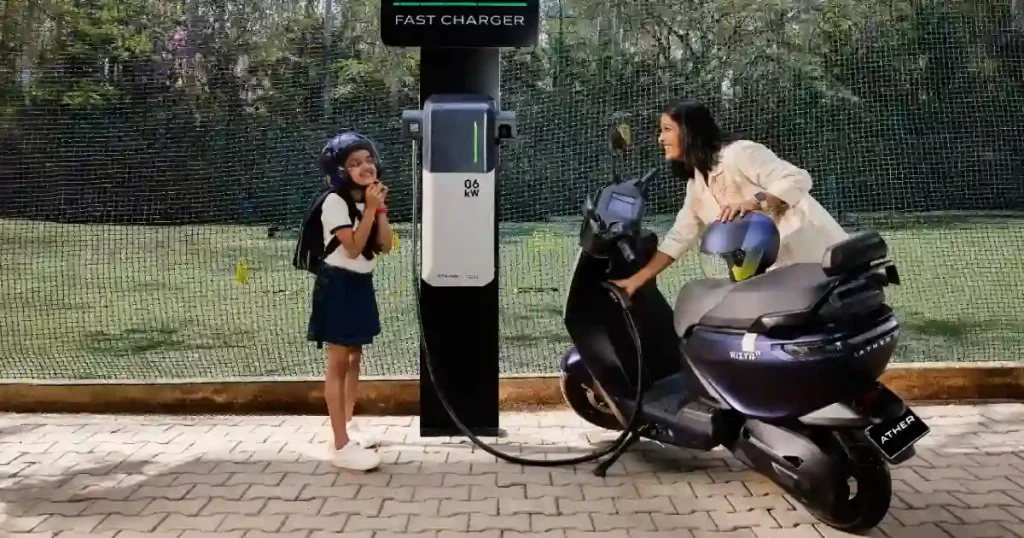
Public charging stations are a possible option, but not every charging station is compatible with every electric scooter.
Different electric scooters may have different charging arrangements. Some scooters charge via a portable charger from a suitable electrical socket, while some models support specific charging connectors or compatible charging networks.
Before going to a charging station, check the supported charging method on the scooter manufacturer’s official website or in the owner’s manual.
When choosing a public charging station, you should verify these points:
- Is the station compatible with your scooter’s charging system?
- Is the station currently operational?
- What are the current charging rates and applicable service charges?
- Is the charger available or already occupied?
- Is there a facility to safely park the scooter while charging?
- Is the charging network’s app, account, or payment method required?
One important note: Seeing a charging station on the map and finding an available charger upon arrival are two different things. Therefore, it’s best to check the station’s latest status information before going there for the first time.
What options are available if you live in an apartment?
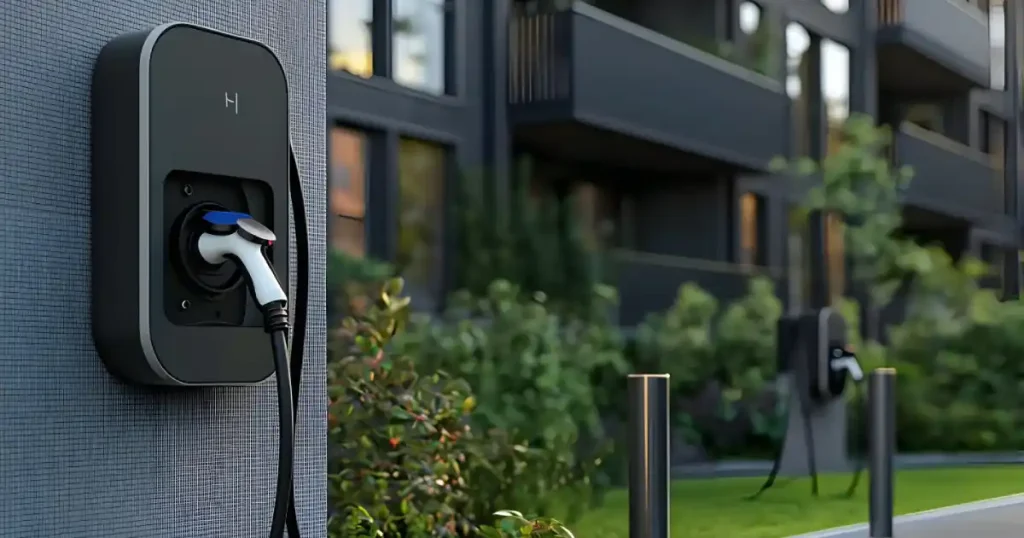
If you live in an apartment or housing society, first check your parking and electricity arrangements.
If charging facilities are not available in the parking lot, talk to the society management or housing association. Ask them if installing a dedicated charging point is an option.
It’s important to clarify the following before installation:
- Can a charging point be installed in the parking space?
- How will the electricity connection and meter be arranged?
- Does the society require permission or additional approval for installation?
- Is the electrical wiring and load suitable?
- Who will bear the cost of installation and maintenance of the charging point?
The Ministry of Power’s EV charging guidelines contain provisions for installing public charging infrastructure in residential societies and other locations. However, this does not mean that every resident can install a socket or charger in their parking lot without permission.
Applicable rules, society requirements, and electrical safety should be verified before installation.
How to Manage EV Charging in a Rented Flat?
If you live in a rented flat, it is helpful to discuss charging arrangements with the landlord in advance.
If the parking lot has a suitable electrical connection, charging may be possible with the landlord’s permission and the advice of a qualified electrician. However, running extension cords through common areas, staircases, or public walkways is not a safe solution.
If the landlord doesn’t allow a charging point to be installed, you can check for a nearby compatible public charging station or office charging facility.
Here’s a practical tip: Confirm the arrangement with both your landlord and the charging provider before booking a scooter. Don’t purchase a scooter simply on the assumption that you’ll have a charging facility in the future.
Can a removable battery on an electric scooter help?
Some electric scooters have removable batteries, while some models have fixed batteries. If you don’t have a charging socket in your home parking space, a model with a removable battery may be useful—but only if the manufacturer allows you to remove the battery from the vehicle and charge it.
Before choosing a removable battery, check:
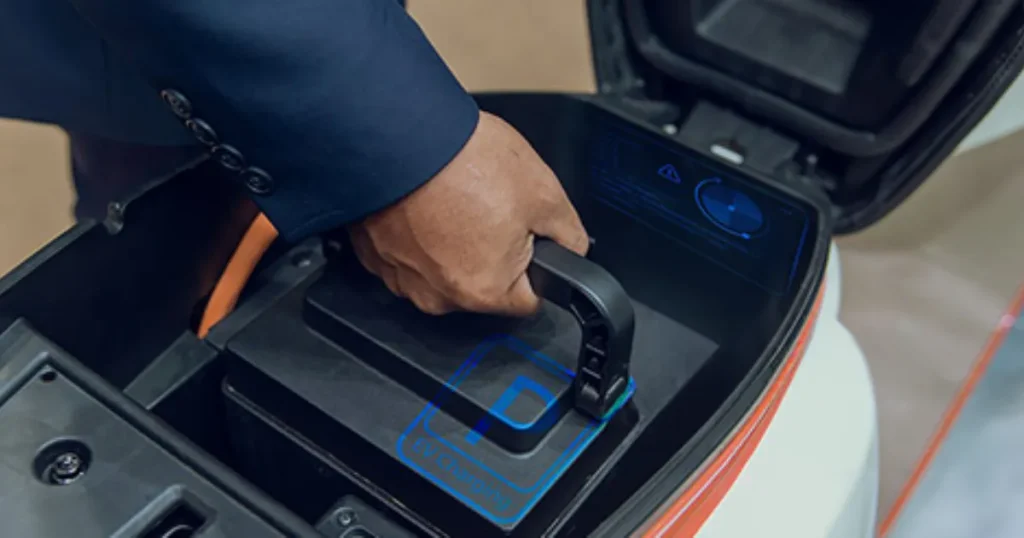
- Is the battery user-removable?
- Does the manufacturer allow charging the battery inside the home or office?
- What is the battery’s weight, and is it practical to safely transport it?
- Is the original charger included or will it need to be purchased separately?
- Is a suitable electrical socket available for charging the battery?
It’s important to follow the manufacturer’s safety instructions when handling the battery. Do not charge with a damaged battery, an unsuitable charger, or unsafe wiring.
And remember: a removable battery does not automatically mean faster charging or lower charging costs. Charging time and electricity consumption depend on the actual battery capacity and charger specifications.
How much will it cost to charge an electric scooter at a public charging station?
It’s not accurate to give a fixed answer to this, as charging costs depend on battery capacity, the amount of energy used, charging station rates, and additional service charges.
Check the rates of public charging stations before using them. If you frequently go to a station to charge your scooter, consider the extra travel time and cost.
You can use this formula to get a rough estimate of your monthly charging expense:
Monthly charging cost = Monthly electricity consumed × Applicable rate per unit + Additional charging fees
Here, electricity consumption is calculated in kWh. The actual billed amount may differ slightly from a simple battery-capacity calculation due to charging losses and the provider’s billing method.
For example, if you know your daily running, scooter energy consumption, and local charging tariff, you can estimate the monthly cost. But the cost estimate for another scooter doesn’t directly apply to your model.
When comparing an EV to a petrol scooter, factors such as purchase price, insurance, maintenance, charging expense, and battery warranty should also be included.
How to Find a Charging Station?
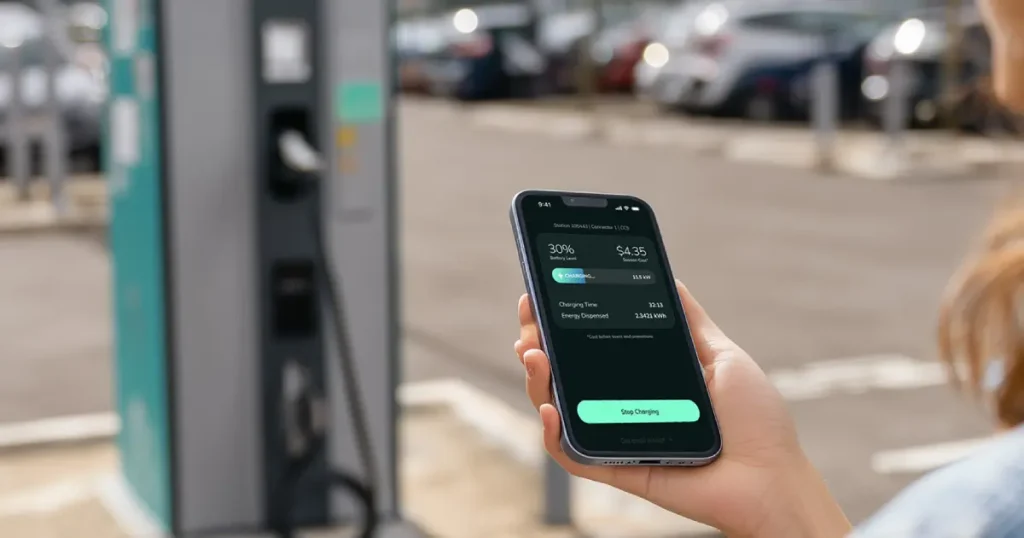
Before purchasing an electric scooter, check charging stations near your home, office, and regular travel route.
Follow these steps:
- Check your scooter manufacturer’s official app or website.
- Search for the location of compatible charging stations.
- Verify the charger type and availability on a public charging network app.
- If possible, visit a nearby station before purchasing to confirm charging arrangements.
- Also identify a backup charging option.
If you commute to work daily, it may be useful to find a charging facility near your office. But first, confirm that employees are allowed to charge there and that the facility is compatible with your scooter.
Similarly, just because a charger is listed at a mall or commercial complex doesn’t mean every scooter owner can use it without restrictions. It’s best to check access rules and charging fees first.
Follow This Checklist Before Buying an Electric Scooter
If you don’t have home charging, be clear about the answers to these questions before booking:
- Is there a compatible charging facility near my home or office?
- Can I use that facility regularly?
- Is the charging station’s location convenient for my daily route?
- Is the scooter’s charging connector and supported charging method compatible with my available options?
- If I choose a model with a removable battery, can I safely charge it?
- Have I checked public charging rates and additional fees?
- What will be my backup option if my usual charger is unavailable?
- Is the scooter’s real-world range sufficient for my daily travel needs?
Answering these questions upfront can make making a purchase decision much easier.
EVjournal Says..
Should You Buy an Electric Scooter Without Home Charging?
If you don’t have charging facilities at home, purchasing an electric scooter isn’t automatically a bad decision. However, it’s crucial to confirm practical charging arrangements before purchasing.
If reliable and compatible charging is available at your office, apartment, or daily route, an EV may be suitable. A model with a removable battery may also be worth considering, provided the manufacturer supports safe off-vehicle charging.
But if a charging station is far away, availability is uncertain, and charging will require extra travel daily, compare your options first. If necessary, it’s reasonable to consider a petrol scooter or alternative transportation option.
Simple rule: find a charging solution first, then choose an electric scooter.
The best decision for buying an electric scooter is one that practically fits your budget, daily travel, and charging access.

1 thought on “Electric Scooter Without Home Charging? Read This Before You Buy”